
Women in Poker: What the Numbers Actually Say
In July 2025, Leo Margets sat down at the final table of the World Series of Poker Main Event. She finished seventh for $1,500,000. What made it news was not the money — it was that she was the first woman to reach that table since Barbara Enright in 1995, and only the second in the tournament’s history.
Thirty years. One woman at nine seats, twice, in the entire run of the most-played tournament in the game. That number is the whole conversation about women in poker, and it is worth looking at properly rather than sentimentally.
What the field actually looks like
The WSOP Main Event is the closest thing poker has to a census, because almost anybody who plays seriously turns up eventually.
| Year | Total entrants | Women | Share of field |
|---|---|---|---|
| 2025 | 9,735 | 369 | 3.79 % |
| 2026 | 9,208 | 431 | 4.68 % |
Two things are true at once here, and most articles only report one of them.
The share is genuinely rising: 431 women in 2026 against 369 the year before, in a field that was smaller overall. That is a real increase, not a rounding artefact — nearly a full percentage point in twelve months, which in a field this size is a lot of people deciding to enter.
And it is still under five percent. At a nine-handed table, that means the average woman playing the Main Event sits down expecting to be the only one, all week. Whatever else is going on, that is the room.
Why the number is low, and which explanations survive scrutiny
The explanation you hear most often is about aptitude, and it does not survive five minutes of thought. Poker is a game of incomplete information and disciplined arithmetic. There is no plausible mechanism by which it would be gendered, and the results of women who do play — Margets has over $2 million in recorded live winnings — say what you would expect them to say.
The explanations that hold up are duller and structural.
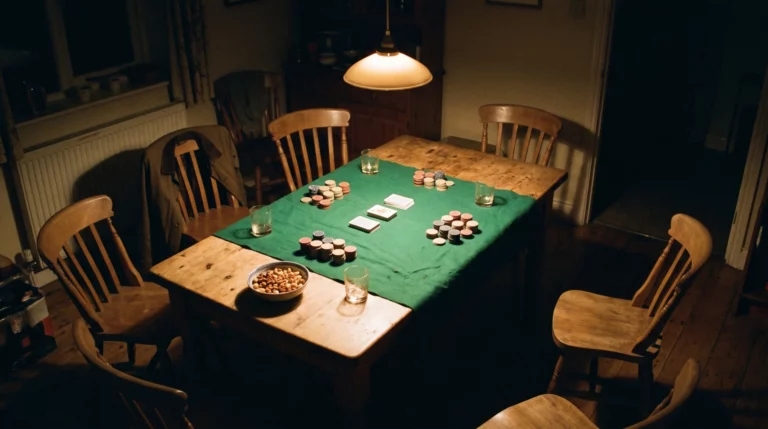
- Entry is social, not commercial. Almost nobody’s first hand is in a casino. It is at somebody’s kitchen table, taught by somebody they already know. If the home games in your life are men, the pipeline never starts.
- The room is a workplace for eight hours. Live poker is long, physical and public. A room where you are one of nine at a table and one of forty in a hall is a different room, and the cost of being there is not evenly shared.
- Variance requires a bankroll and a runway. Playing through a losing month is a financial position before it is a psychological one.
The thing nobody in apparel wants to say
We make poker clothing, so we should be honest about our own corner of this. Search women’s poker shirt and the search volume is close to nothing — around forty a month in the United States against several hundred for the men’s equivalent. The industry reads that as proof of no demand and stops there.
That is a circular argument. Nobody searches for a category that has never existed. What is on offer is overwhelmingly men’s sizing with a different label, or the same graphic shrunk and turned pink.
We are not going to pretend we have solved this. Our range today is unisex, cut regular, and that is a compromise rather than an answer — unisex sizing fits some women well and others not at all. Saying so is the least we can do while the range is what it is. If you play and you have opinions about what the fit gets wrong, the inbox is one person and we read all of it.
Where it goes
One percentage point a year is not a revolution, but compounded it is not nothing either. The Main Event field will not be balanced in this decade. It will be measurably less lopsided, and the visible part of that — a woman at the final table for the first time in thirty years — does more for the pipeline than any amount of goodwill from brands like ours.
The kitchen table is still where it starts. If your Friday game has been the same six men for fifteen years, that is not a policy problem. It is an invitation you have not sent.